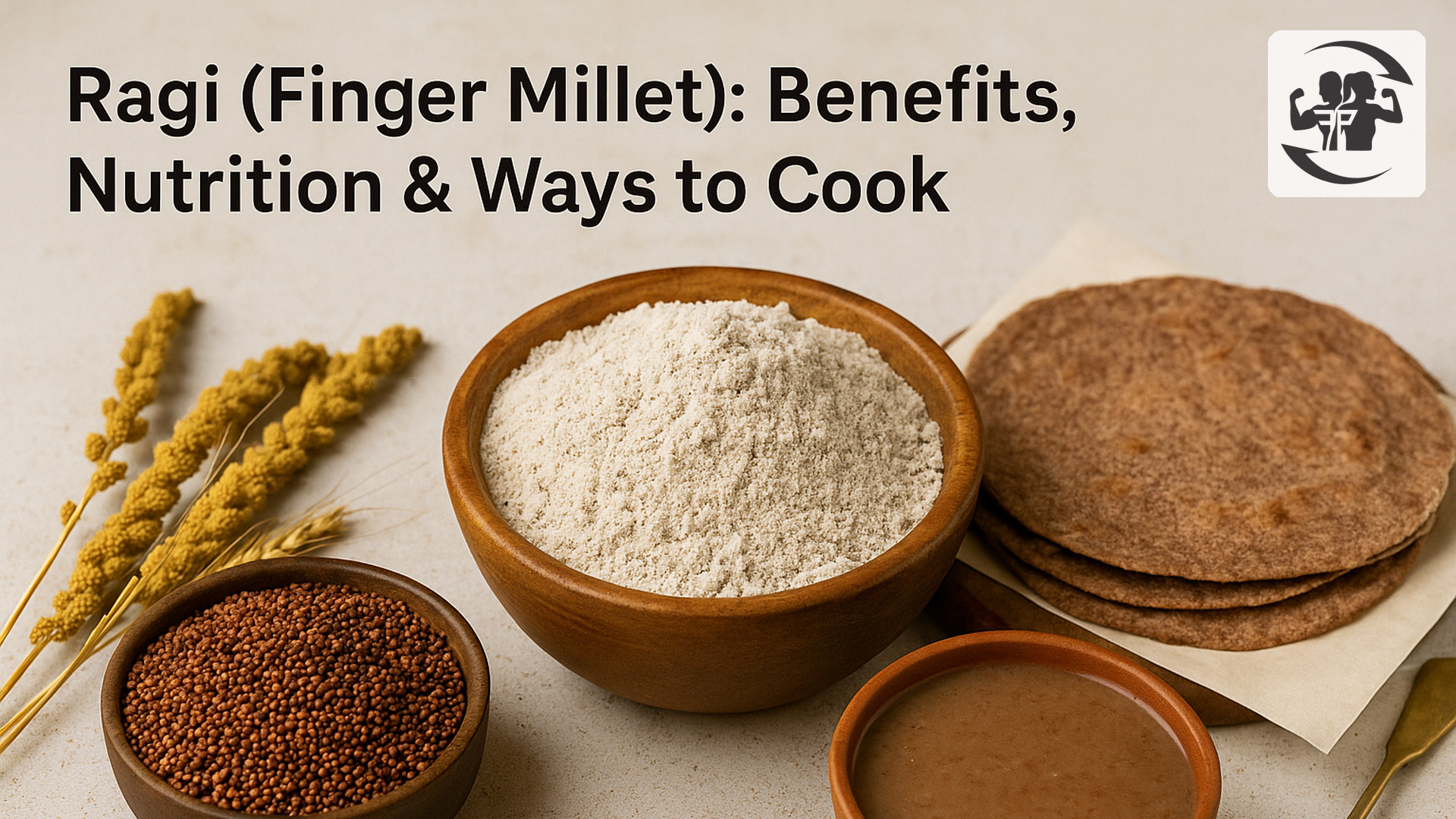
Ragi—also known as finger millet—is a hardy, gluten‑free ancient grain cherished across India for its earthy taste and everyday nourishment. It thrives in semi‑arid regions, especially in southern states like Karnataka and parts of Maharashtra, Andhra Pradesh and Tamil Nadu, and is also cultivated in East Africa. Its resilience and minimal water needs make it a sustainable choice for modern kitchens.
Why ragi flour is good for you
Ragi flour is naturally rich in dietary fiber and is among the best cereal sources of calcium, supporting bone health. It provides plant protein, iron and essential amino acids, with a low to moderate glycemic response that helps steady energy. When sprouted, ragi’s micronutrient availability can improve further. (General wellness information; not medical advice.)
How to eat/cook ragi
- Rotis/Bhakri: Mix ragi flour with warm water and a pinch of salt; pat by hand or roll with a little whole‑wheat for binding.
- Dosa/Idli: Substitute part of the rice with ragi for a nutty flavour.
- Porridge/Malt (ragi java): Whisk into water or milk, simmer, and finish with jaggery and cardamom.
- Baking & Snacks: Swap 20–30% of wheat flour with ragi in pancakes, muffins, laddoos and crackers.
Approximate nutrition (per 100 g ragi flour)
Energy ~330–360 kcal; Carbohydrates ~70–75 g; Protein ~7–8 g; Fat ~1–2 g; Fiber ~10–12 g. Naturally high in calcium and a source of iron and magnesium (values vary by variety and processing).
Tips for best results
Use fresh, finely milled ragi for softer rotis and better aroma. Store airtight in a cool, dry place; for longer life, refrigerate. Pair ragi with dal, ghee or yogurt to round out amino acids and enhance satiety.
At Forte Pure, we mill ragi in small batches in Gurugram so you can enjoy fresh, preservative‑free flour with every order.