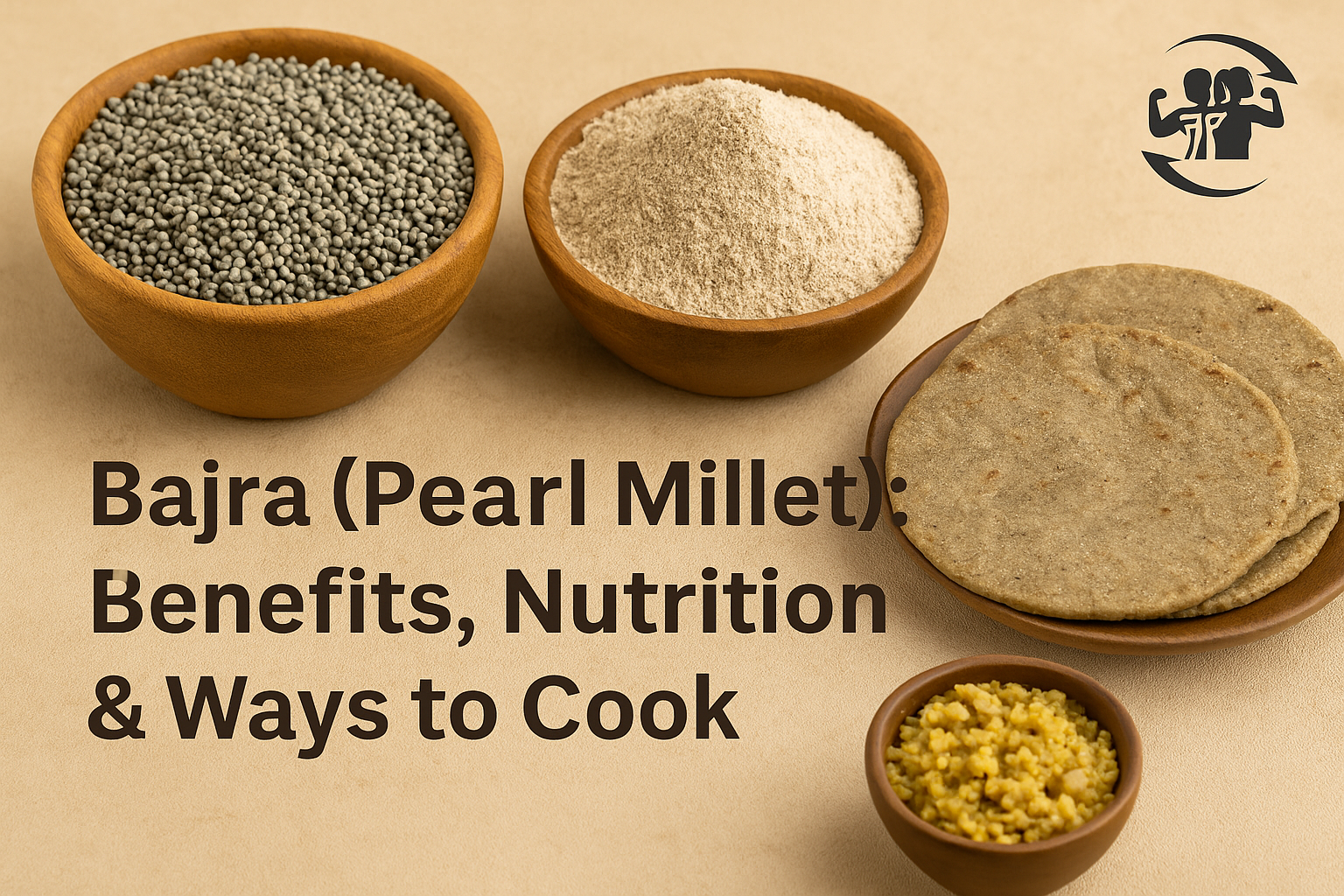
Bajra—India’s beloved pearl millet—is a naturally gluten‑free, climate‑smart grain with a nutty taste and hearty texture. Widely cultivated in Rajasthan, Gujarat, Haryana, Uttar Pradesh and Maharashtra, bajra also grows across the African Sahel. Its drought tolerance and short growing cycle make it a sustainable staple for modern kitchens.
Why bajra flour is good for you
Bajra flour is rich in dietary fiber and provides steady energy. It’s a good source of plant protein, iron, magnesium and phosphorus, and contains polyphenols and antioxidants. Thanks to its fiber and slowly digestible starch, many people find bajra meals more satiating. (General wellness information; not medical advice.)
How to cook/eat bajra
- Bajra roti/bhakri: Knead warm water into bajra flour with a pinch of salt; pat by hand or combine with a little whole‑wheat for easier rolling. Serve with ghee and seasonal sabzi.
- Khichdi & porridge: Pressure‑cook bajra with moong dal for a comforting winter dish; or simmer as a breakfast porridge with milk, jaggery and cardamom.
- Dosa, idli & cheela: Replace part of the rice/gram with bajra for a nutty flavour.
- Baking & snacks: Blend 20–30% into pancakes, crackers and laddoos.
Approximate nutrition (per 100 g bajra flour)
Energy ~360–370 kcal; Carbohydrates ~67–70 g; Protein ~10–12 g; Fat ~5–7 g; Fiber ~8–11 g. Naturally a source of iron, magnesium, and B‑vitamins (values vary by variety and processing).
Tips for best results
Use freshly milled bajra for softer rotis and fuller aroma. Store airtight; refrigerate in warm months. Pair with dal, yogurt or ghee to round out amino acids and enhance absorption. At Forte Pure, we mill bajra in small batches in Gurugram—no chemicals, no additives, no preservatives—so you can build health with every bite.