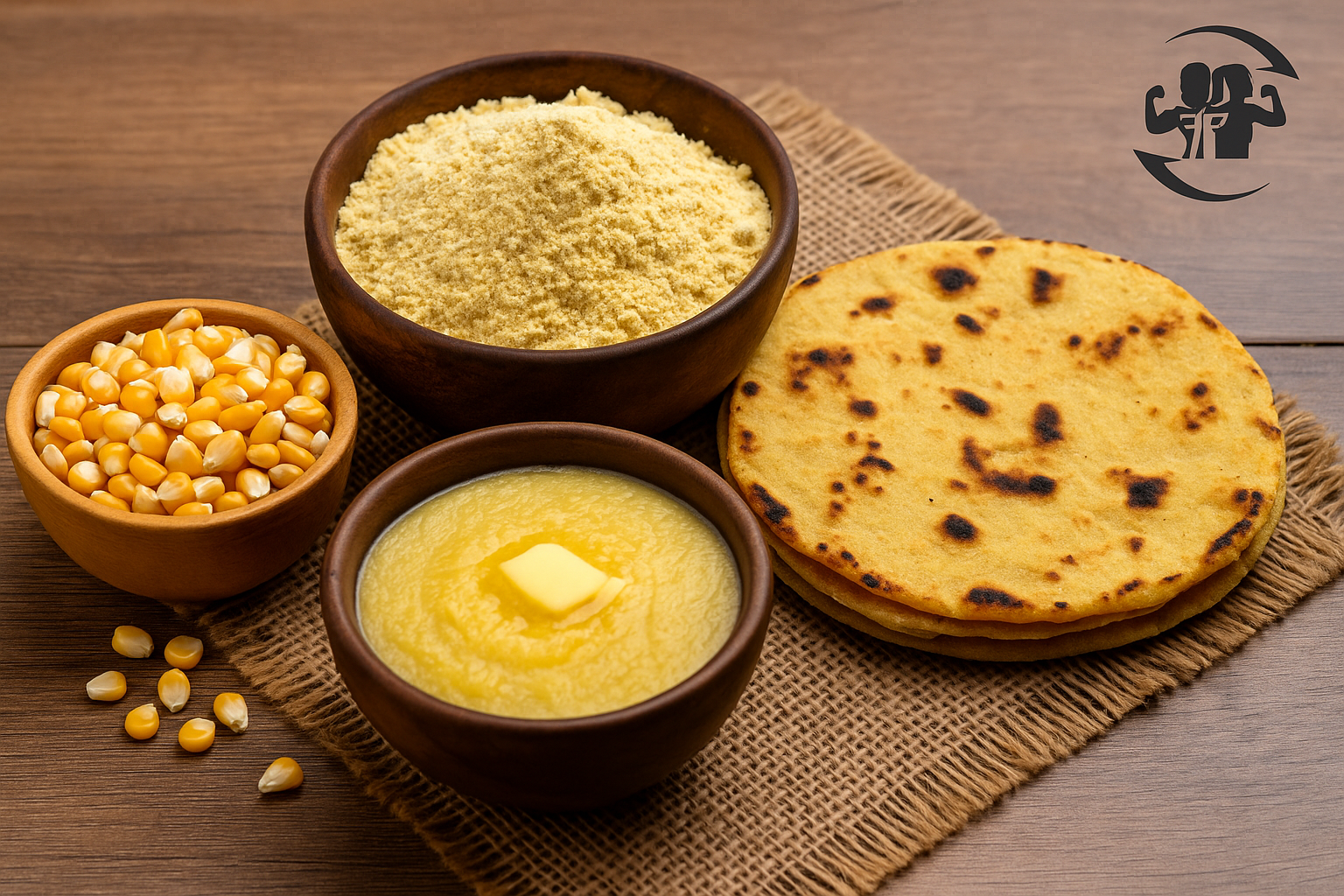
Makka—also known as maize or corn—is a naturally gluten-free grain with a sunny flavour and hearty texture. In India, maize is grown widely across Karnataka, Andhra Pradesh, Telangana, Maharashtra, Madhya Pradesh, Rajasthan, Bihar, Uttar Pradesh and Punjab, thriving in both kharif and rabi seasons. When freshly milled, makka flour (makki ka atta) delivers warm aroma and golden colour that shines in everyday meals.
Why Makka flour is good for you
Maize flour provides complex carbohydrates for steady energy and is a source of dietary fiber that supports fullness and digestion. It offers plant protein along with magnesium, phosphorus, potassium and B-vitamins like thiamin and folate. Naturally gluten-free, it’s a versatile option for diverse diets. (General wellness information; not medical advice.)
How to cook/eat makka (maize) flour
- Makki ki roti/rotla: Mix makka flour with warm water and a pinch of salt. Pat by hand or roll with a little whole-wheat for binding. Serve with sarson ka saag, seasonal sabzi, or yogurt.
- Upma & porridges: Simmer coarse maize flour or cornmeal with vegetables, or make a sweet breakfast with milk, jaggery and cardamom.
- Dosa, cheela & idli: Replace part of rice/gram for a nutty taste and crisp edges.
- Baking & snacks: Blend 20–30% into pancakes, muffins, cornbread-style loaves and crackers for colour and texture.
Approximate nutrition (per 100 g maize flour)
Energy ~360–370 kcal; Carbohydrates ~72–76 g; Protein ~7–9 g; Fat ~3–4 g; Fiber ~6–9 g. Naturally a source of magnesium, phosphorus and B-vitamins (values vary by variety and milling).
Tips for best results
Use freshly milled flour for better aroma and softer rotis. Rest dough 10–15 minutes before patting; add a spoon of ghee for tenderness. Store airtight; refrigerate in warm months.
At Forte Pure, we mill makka in small batches at our Gurugram facility—no chemicals, no additives, no preservatives—so you can build health with every bite.