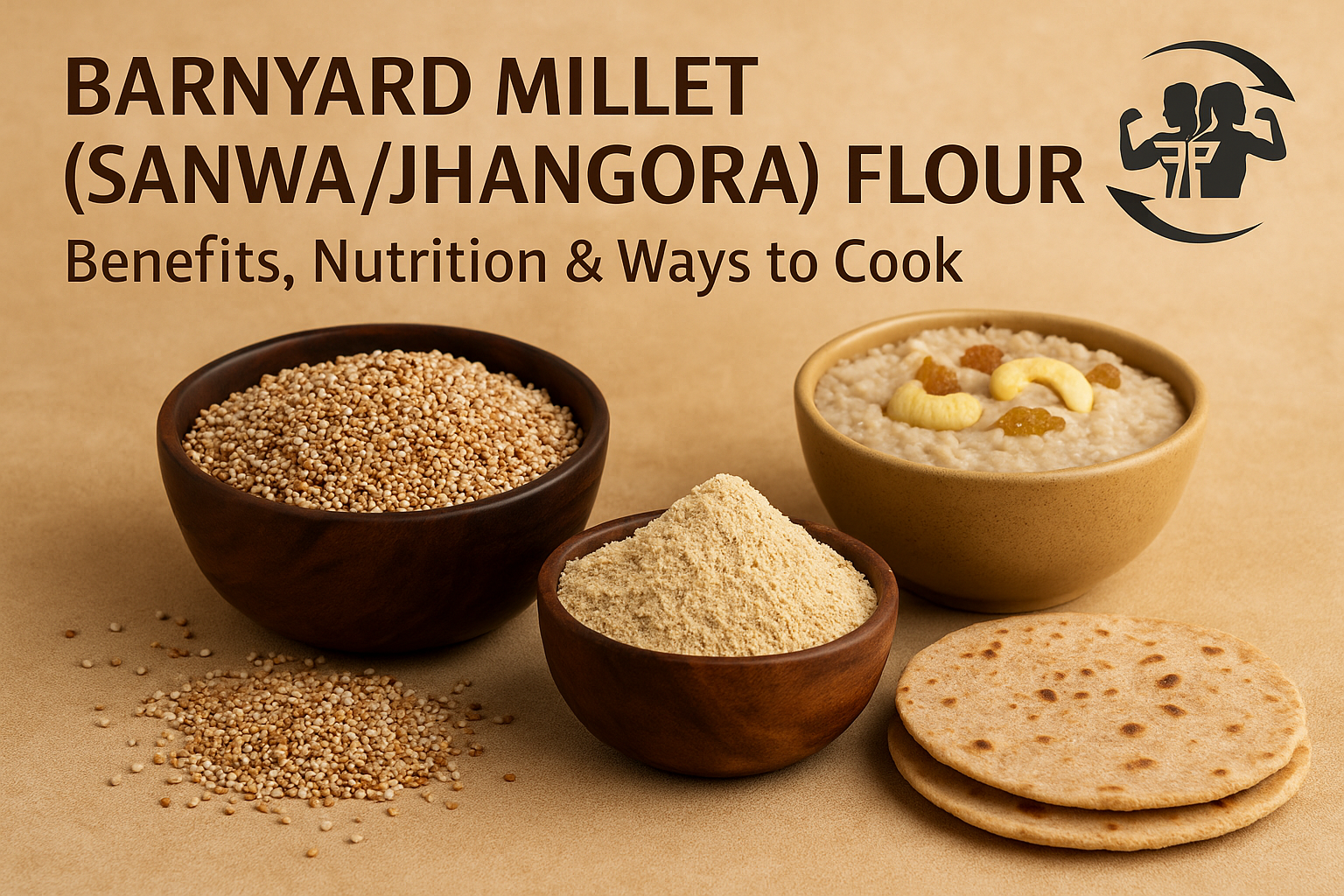
Barnyard millet—called sanwa or jhangora in India—is a tiny, gluten-free ancient grain with a pleasantly nutty flavour and light texture. It grows well in rain-fed, hilly and semi-arid regions, and is cultivated across Uttarakhand, Himachal Pradesh, Madhya Pradesh, Chhattisgarh, Karnataka, Andhra Pradesh and Tamil Nadu, as well as Nepal. Its short crop cycle and low water requirement make it a climate-smart staple for modern kitchens.
Why barnyard millet flour is good for you
This flour is naturally rich in dietary fiber and complex carbs that support steady energy. It provides plant protein and minerals such as iron, magnesium and phosphorus, with polyphenols that contribute antioxidant activity. Many people value barnyard millet for its relatively low to moderate glycaemic response and satisfying feel. (General wellness info; not medical advice.)
How to eat/cook barnyard millet
- Rotis/Thalipeeth: Knead warm water into the flour with a pinch of salt; pat by hand or mix with a little whole-wheat for easier rolling.
- Dosa, idli & cheela: Swap part of rice/gram for a nutty flavour and extra fiber.
- Upma, khichdi & porridge: Use cracked grain or flour for hearty bowls; sweeten porridge with jaggery and cardamom (popular in fasting/vrat menus).
- Baking & snacks: Replace 20–30% of wheat flour in pancakes, muffins and crackers for a wholesome twist.
Approximate nutrition (per 100 g barnyard millet flour)
Energy ~330–360 kcal; Carbohydrates ~65–70 g; Protein ~8–11 g; Fat ~3–4 g; Fiber ~9–13 g. Naturally a source of iron, magnesium and B-vitamins. Values vary by variety and milling.
Tips for best results
Choose freshly milled flour for aroma and softness. Rest dough for 10–15 minutes; add a spoon of ghee or yogurt for tenderness. Store airtight in a cool, dry place; refrigerate in warm months.At Forte Pure, we mill barnyard millet in small batches at our Gurugram facility—no chemicals, no additives, no preservatives—so you can build health with every bite.