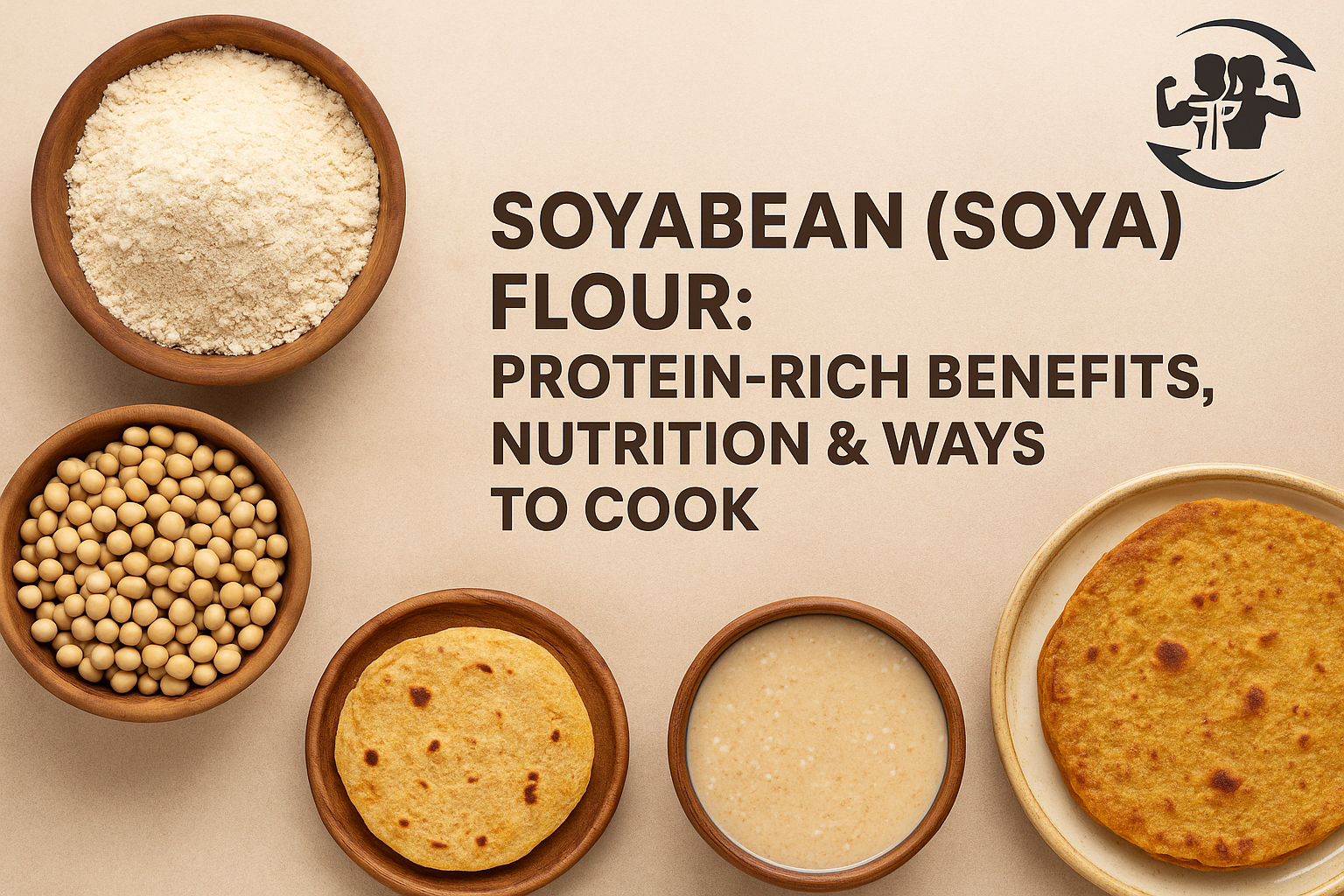
Soyabean flour—made by finely grinding dried soybeans—is a naturally gluten-free pantry hero that boosts protein and texture in everyday dishes. In India, soy is grown widely across Madhya Pradesh (the “soy bowl” of India), Maharashtra, Rajasthan, and Telangana, and is also cultivated in the U.S., Brazil and China. When freshly milled, soya flour brings a warm, nutty aroma and excellent binding to rotis, batters and bakes.
Why soyabean flour is good for you
Soya flour is celebrated for its high-quality plant protein (with essential amino acids), dietary fiber, and minerals like iron, potassium, magnesium and phosphorus. It also provides B-vitamins including folate. Using a little soya flour daily can make meals more satisfying and support muscle maintenance for active lifestyles. (General wellness information; not medical advice.)
How to eat/cook soyabean flour
- Rotis & parathas: Replace 15–25% of wheat flour with soya flour for softer, more filling chapatis.
- Cheela, dosa & idli: Add to batters for extra protein and a mild nutty taste.
- Baking: Blend into pancakes, muffins, breads and cookies (10–30%) to improve tenderness and browning.
- Porridge & sauces: Whisk into milk or soups to enrich protein and body.
Approximate nutrition (per 100 g soya flour)
Energy ~420–450 kcal; Protein ~36–40 g; Carbohydrates ~30–35 g; Fat ~18–20 g (largely unsaturated); Fiber ~6–9 g. Naturally a source of iron, magnesium, potassium and B-vitamins. Values vary by variety and milling.
Tips for best results
Because of its protein and natural oils, store soya flour airtight and refrigerate for freshness. Start with small blends (15–20%) in rotis or batters, increasing as you like. Freshly milled flour has the best aroma and taste.
At Forte Pure, we mill soya in small batches at our Gurugram facility—no chemicals, no additives, no preservatives—so you can build health with every bite.